


Insights from Howard Elliott President Brian Berk at High Point Market
The home furnishings industry is no stranger to uncertainty. From shifting consumer spending habits to economic and geopolitical challenges, manufacturers, retailers, and designers are constantly adapting to new realities.
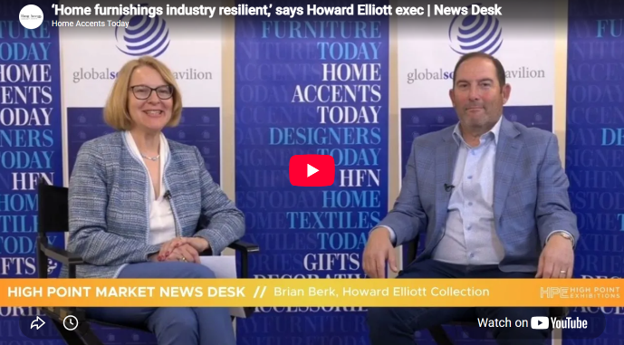
During a recent conversation with Home Accents Today’s Allison Zisko at High Point Market, Howard Elliott President Brian Berk shared his perspective on today’s market conditions, emerging consumer trends, and how technology is helping companies navigate an increasingly complex landscape.
Consumers Continue to Invest in Their Homes
Conventional wisdom suggests that during uncertain economic times, consumers often gravitate toward smaller purchases that provide immediate satisfaction without requiring a significant financial commitment. According to Berk, that trend is playing out across the home furnishings industry today.
“When we’re spending more money filling up our gas tanks and dealing with uncertainty, people tend to nest,” Berk explained.
At Howard Elliott, that behavior is showing up in order patterns. While larger-ticket items such as decorative mirrors, artwork, and accent furniture remain important categories, the company is seeing increased volume in accessories and smaller décor pieces.
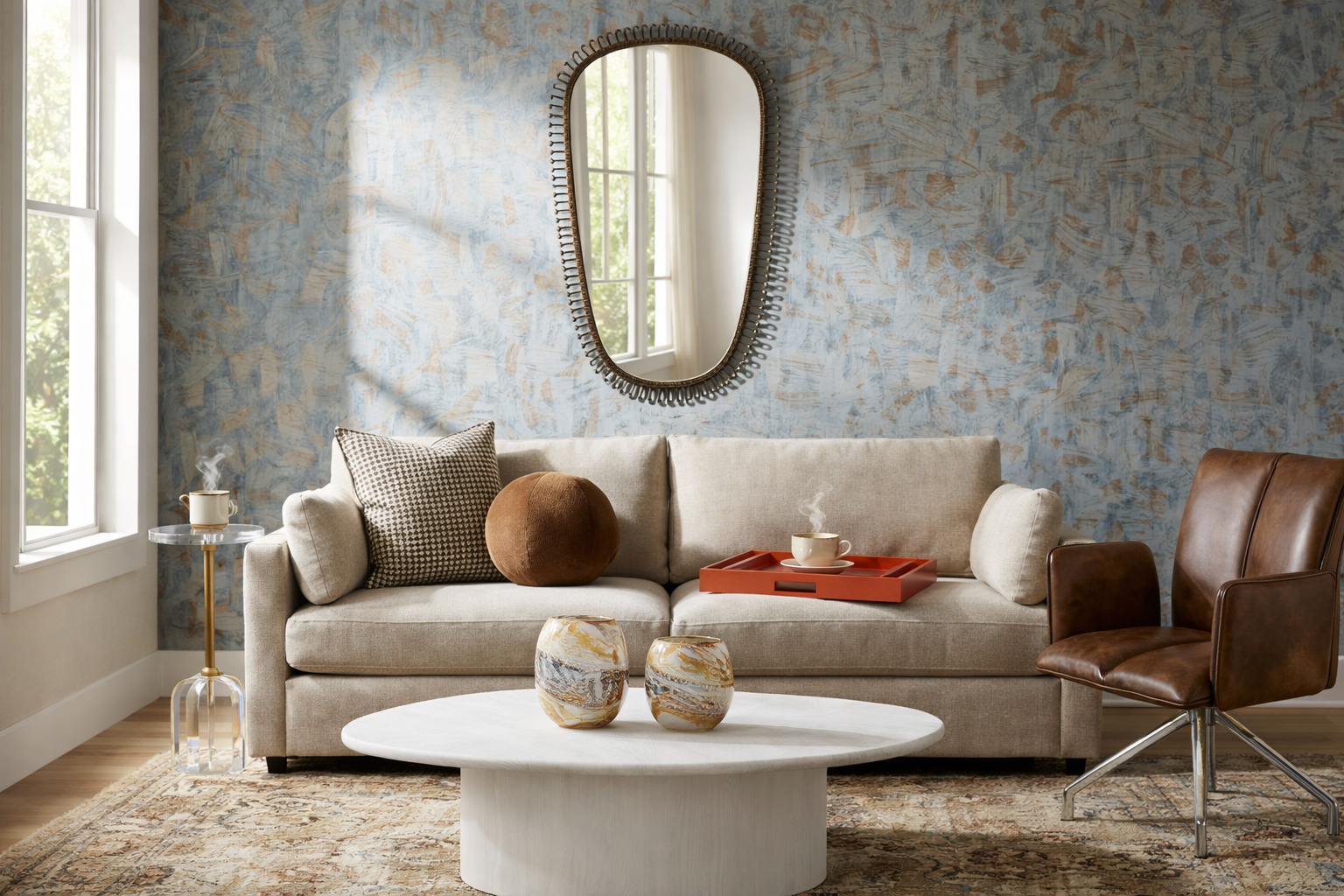
Consumers are still investing in their homes—they’re simply doing so in ways that feel more accessible. Decorative accessories, trays, vessels, sculptures, and accent pieces allow homeowners to refresh a space without undertaking a major redesign.
Resilience in the Face of Headwinds
While economic concerns continue to create challenges across many industries, Berk believes the home furnishings sector has developed a certain resilience through years of navigating disruption.
“We can’t control the outcome of these situations,” he noted. “But we’ve become a little resilient to these headwinds.”
Rather than focusing on factors outside their control, successful businesses are concentrating on what they can influence: customer service, product development, operational efficiency, and strategic planning.
That mindset has created what Berk describes as a sense of “cautious optimism” throughout the industry. Companies continue to invest, innovate, and prepare for future growth while remaining mindful of current market realities.
AI Is Transforming the Home Furnishings Industry
One of the most exciting developments Berk discussed was the growing role of artificial intelligence throughout the product lifecycle.
Historically, the home furnishings industry has been slower than many sectors to adopt new technologies. However, that is rapidly changing.
At Howard Elliott, AI is being incorporated into multiple stages of the company’s go-to-market strategy, including:
- Product development
- Photography and imagery
- Product copy creation
- Operational efficiencies
- Customer search and discovery tools
The goal isn’t simply to adopt technology for technology’s sake. Instead, AI is being used to streamline processes, reduce costs, improve efficiency, and ultimately create a better experience for customers.
“Technology is growing, and we’re implementing it where it’s most helpful to customers and our staff,” Berk said.
Making Product Discovery Easier
One of the most practical examples of AI implementation at Howard Elliott is the company’s enhanced website search functionality.
The AI-powered search engine helps customers find products more intuitively, whether they’re searching for a specific style, color, texture, or visual inspiration.
Imagine discovering a fabric, finish, or color palette you love. Rather than trying to describe it with keywords, users can upload an image and quickly find products with similar colors, textures, and design characteristics.
The technology also helps customers identify alternative products when an item is unavailable, improving both the shopping experience and customer service process.
For designers and retailers managing projects under tight timelines, tools like these can dramatically simplify product sourcing and specification.
Education Remains Critical
While AI continues to evolve at a remarkable pace, Berk believes education is just as important as technology itself.
At High Point Market, Howard Elliott hosted educational programming focused on helping designers better understand emerging technologies and how they can be applied to their businesses.
What’s particularly interesting is how quickly the AI landscape is changing. According to industry experts, many of the tools and strategies being discussed today didn’t even exist six months ago.
As designers become more comfortable with these technologies, they’re discovering practical ways to incorporate AI into everything from concept development and visualization to marketing and client communication.
Looking Ahead
Despite ongoing uncertainty, the outlook for the home furnishings industry remains encouraging.
Consumers continue to invest in their homes. Retailers continue to adapt. Designers continue to seek new tools and resources. And manufacturers continue to find innovative ways to serve their customers more effectively.
For Howard Elliott, that means balancing creativity with technology, maintaining strong customer partnerships, and embracing tools that improve both efficiency and the customer experience.
While market conditions may fluctuate, one thing remains constant: companies willing to adapt, innovate, and focus on delivering value will be best positioned to succeed.
As Berk summarized, the key is working harder, working smarter, and staying prepared for whatever comes next.